

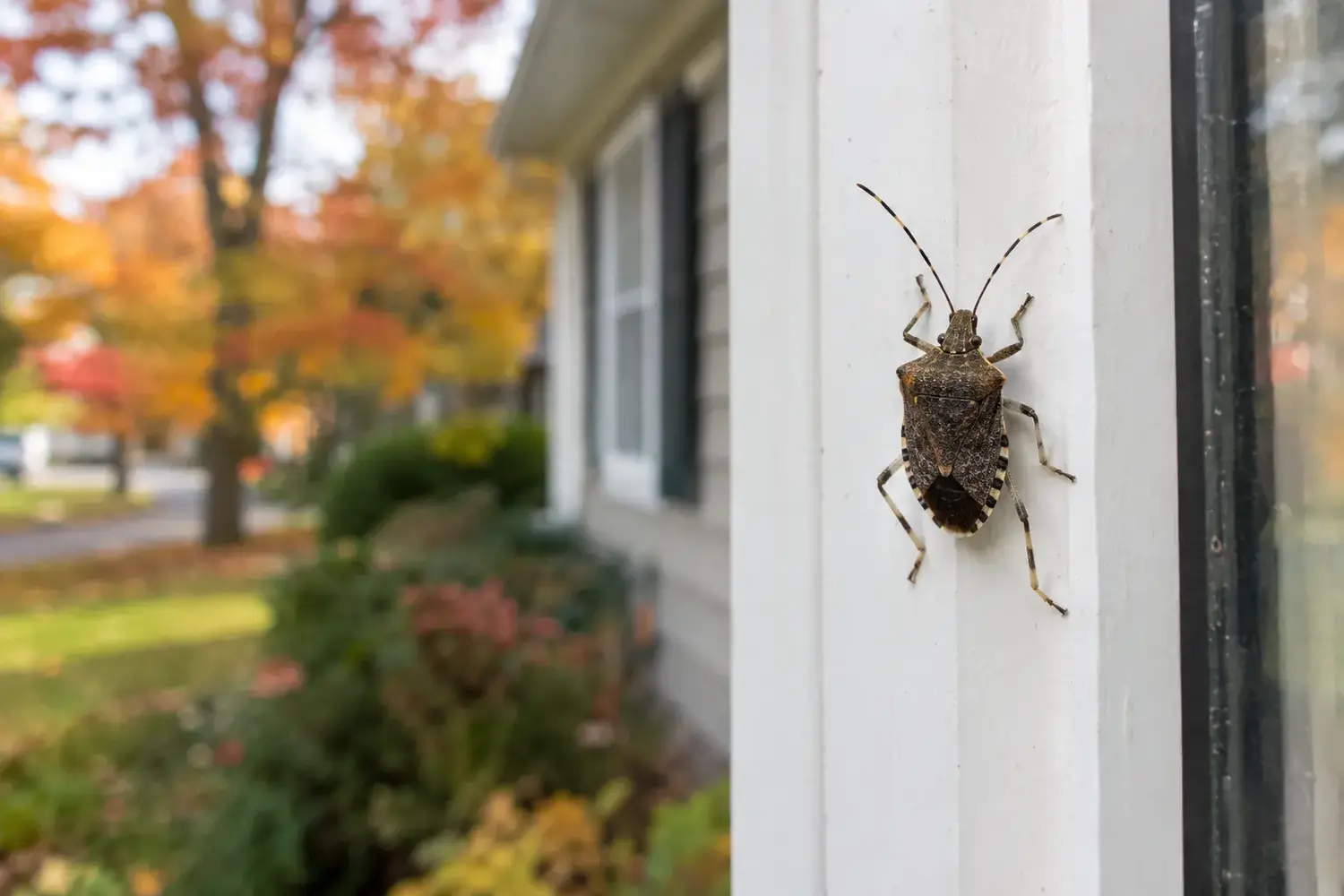
Stink bugs appear inside Westchester County homes every fall because outdoor temperatures drop below the level the insects need to stay active outside. The brown marmorated stink bug, a common invasive species in New York, searches for a protected location to survive winter once daytime temperatures cool in September and October. Houses supply that shelter through small gaps around siding, windows, and vents. This guide covers why the pattern repeats every year, how long the activity typically lasts, and the steps that keep stink bugs from getting back inside next fall.
Why Stink Bugs Move Indoors in the Fall
The brown marmorated stink bug (Halyomorpha halys) is a shield-shaped insect, about 0.66 inch long, with lighter bands on the antennae and darker bands on the wing edges. It was introduced accidentally from East Asia and first collected in the United States in Allentown, Pennsylvania, in 1998. The species has since spread through the Mid-Atlantic and Northeast, including New York.
Adults emerge in spring, mate and lay eggs through summer, and begin searching for overwintering sites in September and October as temperatures drop. Tree bark, leaf litter, and dead wood serve as natural shelter. A house offers the same protection from cold without the exposure, which draws stink bugs toward the warm, sunlit side of a building on fall afternoons.
How Stink Bugs Get Into a House
Stink bugs use existing gaps rather than creating new openings. Common entry points include gaps around window and door frames, torn or missing window screens, openings where siding meets trim or the foundation, and vents without a secure cover. Older homes generally have more of these gaps than newer construction, since window seals, siding, and vent covers wear down over decades.
Stink bugs concentrate on south- and west-facing walls, where sunlight warms the exterior through fall afternoons. Once an insect works its way into a wall void or attic space, it stays largely still until indoor heat or a mild day triggers movement, which is when homeowners usually find one on a wall, window sill, or ceiling.
Are Stink Bugs Dangerous or Harmful?
Stink bugs do not bite people and are not known to transmit disease. The main nuisance is the odor released from glands in the abdomen when an insect is disturbed or crushed. In people sensitive to the insect’s secretions, repeated exposure can trigger an allergic reaction such as rhinitis or conjunctivitis, and crushing a stink bug directly against skin can cause dermatitis. Stink bugs also feed on fruit, vegetable, and ornamental plants outdoors, which makes the species an agricultural pest as well as a household nuisance. Vacuuming a live stink bug into a bag and disposing of the bag outside avoids crushing the insect against a wall or fabric.
Why They Keep Coming Back Every Year
Stink bugs return to the same general overwintering sites year after year because the gaps that worked once, such as a loose window frame or an uncovered vent, remain open unless they are repaired. One season of activity does not clear the surrounding population, since the brown marmorated stink bug is now established across the Northeast and produces a new generation outdoors every summer. Sealing a single entry point stops stink bugs from using that specific route, but any other opening in the building envelope stays available to the next group of insects searching for shelter that fall.
How Long Stink Bug Season Lasts in Westchester County
Stink bug activity in the Northeast builds through September and October as adults search for overwintering sites, then tapers off once sustained cold sets in and insects already inside a wall void or attic settle into place for winter. A mild spell during the colder months, or the start of a home’s heating season, can trigger brief indoor activity outside the main fall window. Stink bugs that survive winter emerge again in spring to feed and lay eggs outdoors, which starts the cycle that brings a new generation back toward homes the following fall.
How to Keep Stink Bugs Out
Four steps address the entry points covered above: seal gaps around window and door frames with caulk, repair or replace torn window screens, secure vent covers on attic and foundation vents, and add door sweeps to exterior doors. Weatherstripping closes gaps that open up as a house settles over time. These steps block the specific openings stink bugs use to reach overwintering sites inside a building, which reduces indoor activity for the current season and the seasons after, as long as new gaps are sealed as they appear. A perimeter treatment timed before stink bugs begin searching for shelter in September addresses entry points that sealing alone misses.
When to Call a Professional
Sealing and perimeter treatment work together. G-Man Exterminating’s stink bug control service inspects a home’s exterior for the entry points stink bugs use, then applies a targeted perimeter treatment before fall activity peaks. G-Man Exterminating holds New York State pest control license #C3613019, has provided pest control service across the Hudson Valley and Western Long Island for more than 30 years, and uses Pet & Family-Friendly Treatment Solutions. Homeowners in Ossining, Yorktown, Mount Pleasant, Somers, New Castle, and the surrounding Westchester County area can get a free quote online or call (845) 226-6211 to schedule an inspection.
FAQ
How do I get rid of stink bugs?
Seal the entry points stink bugs use, including gaps around windows, doors, and vents, then vacuum any stink bugs already inside instead of crushing them. A perimeter treatment applied before fall activity peaks addresses entry points that sealing alone cannot close.
Do stink bugs bite?
No, stink bugs do not bite people. The main nuisance is the odor the insects release from abdominal glands when disturbed, which some people find irritating or allergy-triggering with repeated exposure.
Are stink bugs dangerous?
Stink bugs are not known to transmit disease to humans and are not venomous. They are a nuisance and agricultural pest rather than a health hazard, though sensitive individuals can develop an allergic reaction to the odor.
What attracts stink bugs to my house?
Dropping fall temperatures drive stink bugs toward warm, sheltered spaces. Sunlight warming a building’s exterior, along with gaps around windows, doors, and vents, concentrates stink bug activity on specific walls and entry points.
How long do stink bugs live?
Adult brown marmorated stink bugs that survive winter in a protected location remain active outdoors through the following spring and summer, when the next generation hatches and matures before the cycle repeats that fall.