

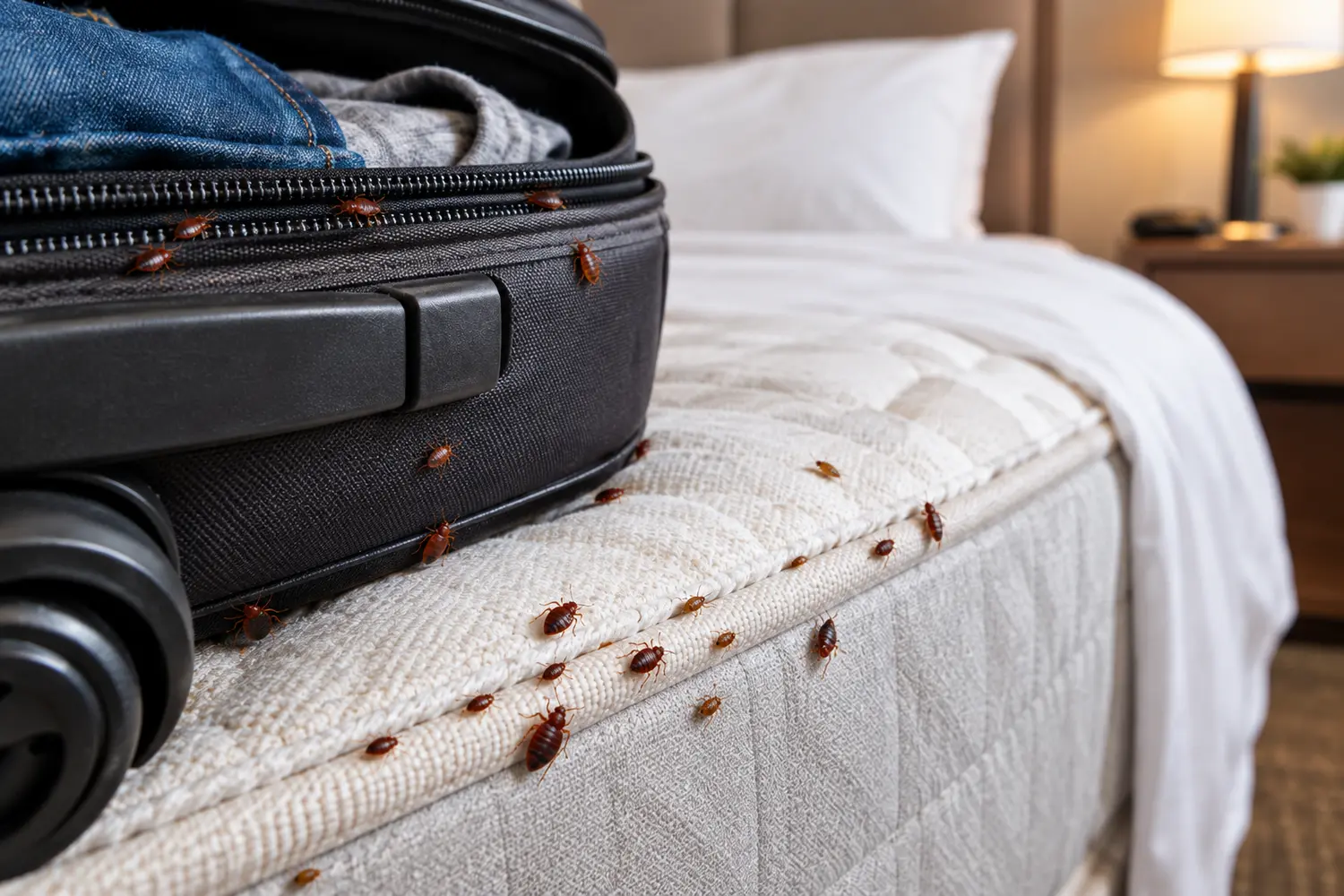
Bed bugs do not spread because a home is dirty. The insects travel by hitchhiking on belongings, which means a spotless house and a cluttered one are equally reachable once bed bugs attach to clothing, luggage, or furniture. A home does not need visible mess for bed bugs to arrive, and an infestation says nothing about how well a household keeps its space. This guide explains how bed bugs actually move from place to place, the situations that introduce them, how fast an infestation can grow once they arrive, and the signs that point to a real problem instead of a false alarm.
Bed Bugs Don’t Care How Clean Your Home Is
Bed bugs don’t discriminate. Any home can get them, regardless of how clean it is, and an infestation is no one’s fault. The insects feed on blood rather than food waste, so they are not drawn in by crumbs, trash, or mess the way ants or cockroaches are. A five-star hotel, a brand-new apartment, and an immaculately kept house are all reachable the same way. An infested item arrives, and the insects establish themselves wherever that item lands. Clutter does make an existing infestation harder to find and treat, since stacks of belongings give bed bugs more places to hide, but clutter does not cause bed bugs to appear in the first place.
How Bed Bugs Actually Spread
Bed bugs do not jump or fly. They spread almost entirely by hitchhiking on belongings and moving short distances on their own once inside a structure. Common ways bed bugs travel include:
- Attach to luggage, backpacks, or bags while traveling
- Cling to clothing during contact with an infested item or space
- Ride along on secondhand, rented, or borrowed furniture
- Travel inside moved belongings from one room to another
- Crawl along seams, baseboards, and furniture joints once inside a home
Secondhand furniture is a common source, which is why upholstered items should be inspected and cleaned before they enter a home.
Common Ways Bed Bugs Enter a Home or Spread Between Rooms
Common situations that introduce new bed bugs into a home include bringing home used furniture or a mattress without inspecting it first, returning from a trip with bed bugs riding in luggage or a backpack, carrying an infested item from one room to another inside the same home, and living in a multi-unit building where bed bugs can move between adjoining units through shared structural gaps. Used clothing, dry cleaning left in a shared bag, and rental or borrowed furniture carry the same risk as secondhand furniture bought outright, since the insects travel with the item rather than the transaction. Placing bags on luggage racks instead of the bed, and keeping clothing off beds and couches during a stay away from home, reduces the chance of carrying bed bugs back. Inside a multi-unit building, an infestation in one unit can reach a neighboring unit without either household bringing in a new infested item, since the insects use the structure itself as a path.
Can Bed Bugs Spread From Person to Person?
Bed bugs can briefly ride on clothing a person is wearing during close contact, but they do not live on skin or in hair the way lice do. A bed bug that ends up on a person’s clothing is still traveling by hitchhiking on an item, not by moving directly from one body to another. The practical risk is carrying an infested item, such as a jacket or bag, from one location to another rather than direct person-to-person contact itself.
How Fast Bed Bugs Spread Once They’re In
An untreated bed bug infestation grows over time because the insects continue feeding and reproducing once established in a home. Bed bugs that start in one room can spread to adjoining rooms as infested items are moved, or as the insects travel along shared structural paths such as baseboards and wall voids in a multi-unit building. The longer an infestation goes untreated, the more hiding spots the population spreads into, which is why early detection and treatment limit how far bed bugs travel inside a home.
Signs You May Have a Growing Infestation
Five signs point to an active bed bug infestation: small, whitish shed skins in seams or crevices, rusty or reddish spots on bed linens from droppings and crushed insects, live bed bugs of any size, eggs or egg casings tucked into cracks, and a sweet, musty odor once an infestation is severe. These signs show up most often along mattress seams, the piping around a box spring, behind a headboard, and inside furniture joints near where people sleep or sit for long periods, since bed bugs stay close to a reliable source of blood meals. Red, itchy welts from bites can occur, but bite marks alone are not a reliable sign of bed bugs, since bite reactions vary by person and can resemble other insect bites or skin irritation.
How to Stop Bed Bugs From Spreading in Your Home
Five steps limit how far an existing infestation spreads: isolate infested items instead of moving them to other rooms, wash and dry bedding and clothing on the highest heat setting the fabric allows, reduce clutter so fewer hiding spots are available during treatment, encase the mattress and box spring to seal off existing hiding places, and avoid moving furniture between rooms until the infestation is resolved. A sealed encasement also makes it easier to spot new activity, since bed bugs trapped inside cannot reach a new hiding spot. These steps slow the spread while a professional inspection confirms the extent of the problem and the right treatment approach.
When to Call a Professional
Bed bugs are not known to transmit disease, but an infestation rarely resolves on its own once it is established. G-Man Exterminating’s bed bug inspection and treatment service identifies where bed bugs are hiding and treats the infestation directly rather than relying on isolated store-bought products. G-Man Exterminating holds New York State pest control license #C3613019, has served the Hudson Valley and Western Long Island for more than 30 years, and uses Pet & Family-Friendly Treatment Solutions. Homeowners in Ossining, Yorktown, Mount Pleasant, Somers, New Castle, and the surrounding Westchester County area can get a free quote online or call (845) 226-6211.
FAQ
Can bed bugs travel on clothes you’re wearing?
Yes, briefly. A bed bug can attach to clothing during close contact with an infested item or environment, but it is still hitchhiking on the clothing itself rather than living on the body.
Do bed bugs spread disease?
No, bed bugs are not known to transmit disease. Some people develop an allergic reaction to bites that causes painful swelling, but the insects themselves are not disease carriers.
Can bed bugs spread from person to person?
Not the way lice or other parasites do. Bed bugs spread by hitchhiking on belongings and environments, so the practical risk is an infested item moving between people rather than direct body-to-body transfer.
How fast do bed bugs spread from person to person?
Bed bugs don’t spread from person to person in the way that phrase suggests. They spread when an infested item, such as a bag or jacket, moves from one location to another, which can happen as quickly as a single trip or visit.